
Technology metals
Relevance
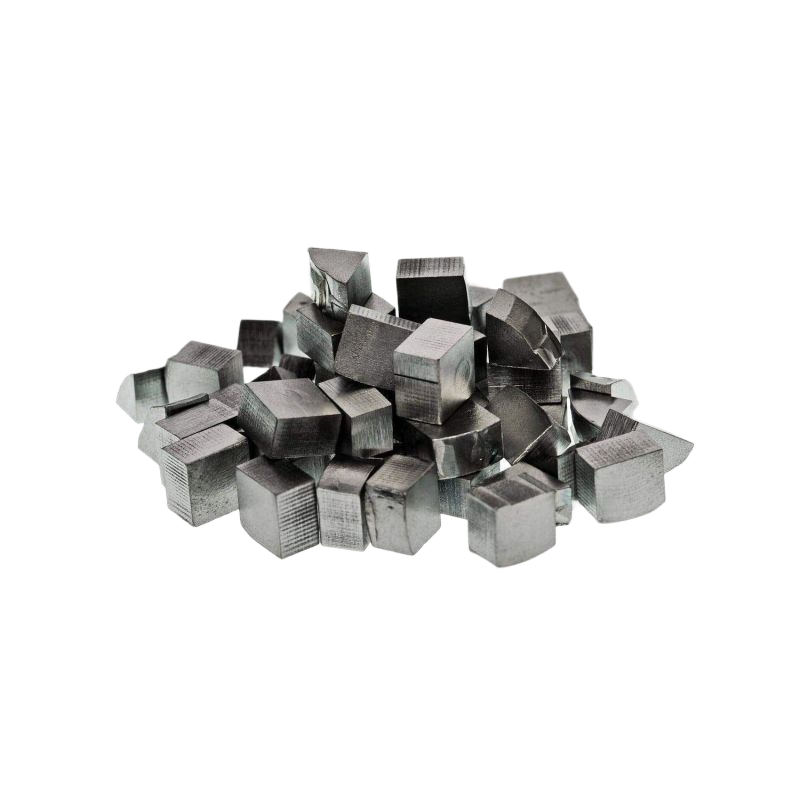
Technology metals are a collective term for metals and other metallic elements that are important for the manufacture of modern electronic, energy, and high-tech products.
There is no single universally accepted list of technology metals. Depending on the classification used, they may include gallium, germanium, indium, tantalum, cobalt, lithium, rare earth elements, and a number of other metals used in high-tech products and engineering systems.
The importance of these materials is primarily associated with their special physical and chemical properties. Even a relatively small amount of a specific element may be required for the operation of semiconductors, batteries, permanent magnets, optical systems, and other technically sophisticated products.
General Characteristics
Technology metals do not form a separate group in the periodic table and differ substantially in their properties. They include light metals and refractory metals, rare earth elements, materials with semiconductor properties, and metals used mainly as part of special compounds or alloys.
The term technology metals is defined primarily by the field of application of the material rather than by its position in the periodic table or production volumes. This category includes elements whose properties make it possible to create electronic components, optical devices, energy storage and conversion systems, special alloys, and other advanced materials.
By-product production is characteristic of some technology metals. For example, gallium is obtained mainly during the processing of raw materials for aluminum production, as well as zinc. Germanium and indium are often associated with the processing of zinc-bearing raw materials. A significant share of cobalt is produced together with copper or nickel.
Applications
One of the most important fields of application for technology metals is the electronics and semiconductor industry.
Gallium is used mainly in semiconductor materials, including gallium arsenide and gallium nitride. These are used in integrated circuits, light-emitting diodes, laser diodes, radio-frequency and power electronics, photodetectors, and certain types of solar cells.
Germanium is in demand in fiber-optic communication systems, infrared optics, and semiconductor technology. Thanks to its optical and electrical properties, it is used in specialized devices where conventional structural materials do not provide the required performance.
Indium is widely used in the electronics industry. One of the most important areas is the production of transparent electrically conductive coatings based on indium tin oxide, used in particular in the manufacture of flat-panel displays. Indium compounds are also used in semiconductor technology.
Tantalum is in demand in the production of electronic components, primarily capacitors. In addition, it is used in special alloys and materials intended for operation at high temperatures and in aggressive environments.
Cobalt is used in electrode materials for a number of battery technologies and in heat-resistant alloys for gas turbine engines. Lithium is one of the key elements of modern rechargeable battery systems.
Rare earth elements are used in permanent magnets, electronic and optical materials, light sources, catalysts, and other specialized products.
Production Features
The production chains of technology metals vary considerably. Some elements are mined as the primary mineral raw material, while others are recovered mainly as by-products during the processing of ores of more widely produced metals.
In by-product production, an increase in demand for a specific technology metal does not always make it possible to increase output quickly. The volume of available raw materials may depend on the scale of mining and processing of the primary metal.
The degree of purification of the material is also of great importance. For the semiconductor, optical, and electronics industries, high-purity metals and compounds with controlled impurity content may be required. For metallurgical applications, the requirements are determined by the alloy composition and the conditions of its subsequent service.
Therefore, when selecting technology metals, it is necessary to consider not only the name of the chemical element, but also the purity, chemical composition, product form, and the requirements of the specific production process.
Promising Areas
The development of digital technology, electronics, telecommunications, energy storage systems, electric transport, renewable energy, and specialized industrial technologies supports demand for materials with special electrical, magnetic, optical, and high-temperature properties.
Technology metals are used in semiconductors, batteries, permanent magnets, solar cells, fiber-optic systems, power electronics, and special metallic materials.
At the same time, the concept of technology metals should not be regarded as a synonym for the terms "critical raw materials," "rare metals," "rare earth metals," or "minor metals." These categories may overlap significantly; however, they are used for different purposes and do not have completely identical composition. The same element may simultaneously belong to several groups.
Buy at a Favorable Price
Evek GmbH offers industrial metal products for various fields of application. When selecting technology metals, it is necessary to consider the required chemical composition, purity level, product form, and the technical requirements of the specific project.
Up-to-date information on the availability of a specific material, its characteristics, price, and delivery terms can be obtained from the company's specialists. Evek GmbH managers will help you select products in accordance with the technical requirements of your order.
Request a Quote
Product:
For an accurate quote, include the grade or specification, form, dimensions, quantity and U.S. delivery ZIP code. We will confirm availability, price and delivery for your request.